Stablecoin Fireside
Qivalis: How banks are building a euro settlement asset
Qivalis CEO Jan-Oliver Sell on how bank distribution, public blockchains and continuous operations can support a euro settlement asset.
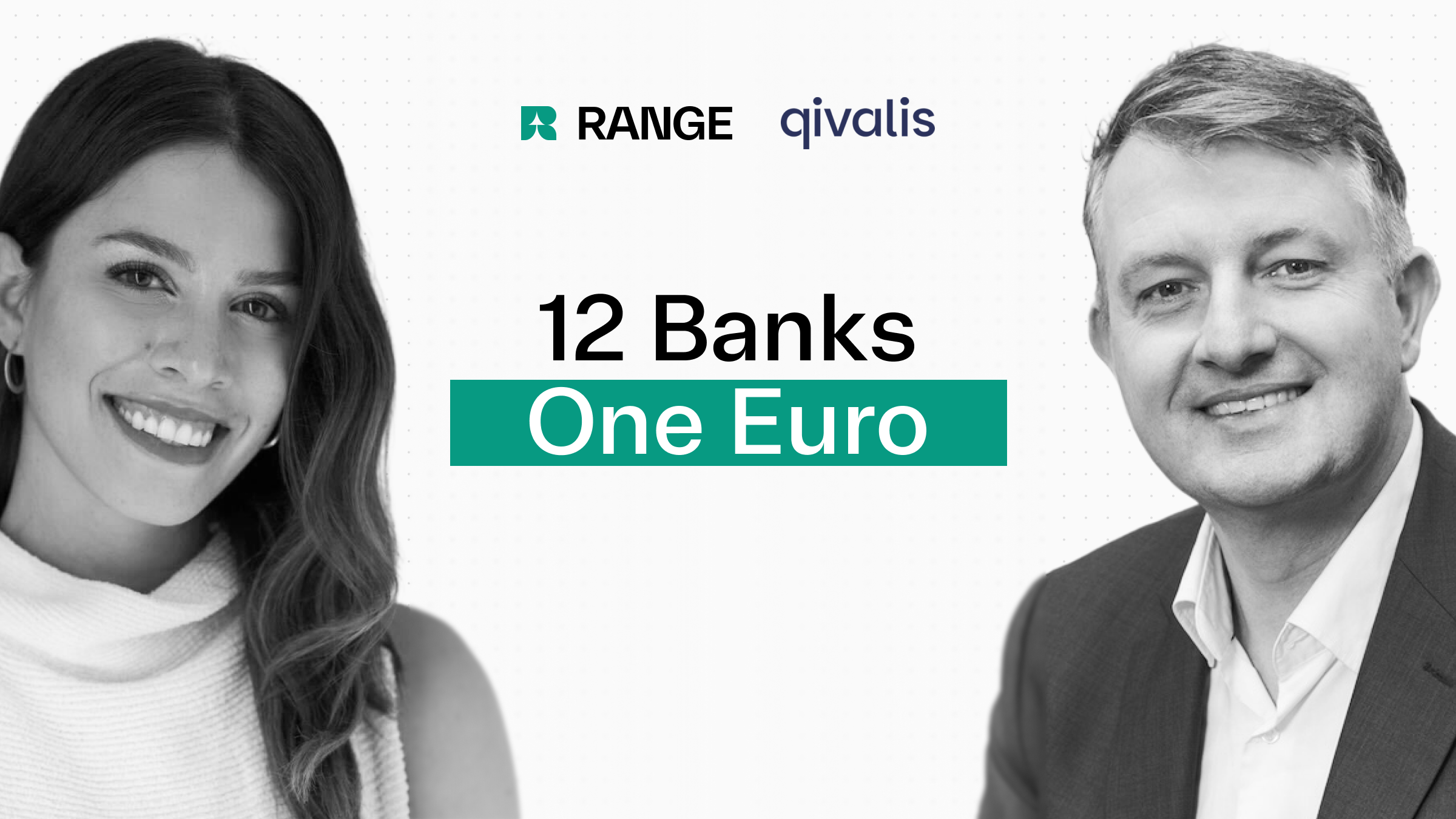
Qivalis is building a euro stablecoin issuer backed by an open consortium of 12 major European banks. Jan-Oliver Sell, CEO of Qivalis, joined Paula Pettit, VP of Strategy and Growth at Range, to explain why a shared token can give banks an onchain settlement asset without fragmenting euro liquidity across separate projects.
Sell brings experience from both regulated finance and crypto. He spent 18 years in London working across asset management businesses, then moved to Berlin after becoming interested in Ethereum and blockchain infrastructure. Most recently, he built Coinbase's German business and worked with the team that secured its first crypto custody license. At Qivalis, that combination informs a model designed to operate on public blockchains at institutional scale.
Institutional euro liquidity starts with a shared token
The consortium began with work at ING roughly three years ago. The initial idea of a bank building its own stablecoin developed into a shared project as more European banks joined. Once the group reached critical mass, the banks founded an independent entity in Amsterdam. The consortium now includes 12 banks across several European countries, with ING, UniCredit, BBVA and BNP Paribas among the names Sell cited in the conversation.
The structure addresses a practical constraint. Separate bank tokens would divide users and liquidity among multiple assets, weakening the depth available to any one of them. A common token gives the participating banks a shared settlement asset and a distribution network that can expand as more members join. The consortium remains open, so each additional bank can extend the network of potential institutional users. The network can then reinforce itself as participating institutions begin to transact and generate liquidity in the same asset. As Sell put it, "we really need a euro stablecoin with depth of liquidity that makes it useful on an institutional scale."
That depth matters because an onchain financial process needs an onchain settlement leg. Sell used tokenized money market funds as one example: settling the asset onchain can reduce counterparty risk, but the full process still needs liquid tokenized money in the relevant currency. If deep euro liquidity is absent, users turn to the liquid currency already available onchain, which today is the US dollar. Sell also illustrated the currency exposure for a European user who earns 8% on a dollar stablecoin, then sees that return overtaken by a 12% depreciation in the dollar. The user gains yield in one currency while remaining exposed to movements against the currency in which they operate.
Range's view is that the operating model has to start with the obligations attached to that settlement asset. Regulatory and reporting requirements should become controls applied to each transaction. The platform should then orchestrate the risk and compliance providers an institution already uses, with monitoring, reconciliation and reporting running from the same record. For a bank-backed euro stablecoin, this creates one control model across issuance, treasury activity and onchain settlement.
Liquidity requires an ecosystem around the euro
A token can be issued before it becomes useful. Dollar stablecoins already sit inside an ecosystem of exchanges, lending and borrowing protocols and derivatives markets, while equivalent euro liquidity remains limited. Sell pointed in particular to the use of USDC and USDT for onchain perpetuals as part of the existing dollar market structure. Qivalis is therefore speaking with different market participants about where European users and other users seeking a dollar alternative already transact, subject to the issuer's compliance and regulatory obligations.
Sell described Qivalis's task directly: "we need to help to orchestrate a similar ecosystem around the euro onchain." That means connecting the stablecoin to the venues and use cases that create reasons to hold, exchange and use it. Lending and borrowing activity can help establish liquidity first, while participating banks and other financial institutions can add another source of distribution as their own blockchain processes come online.
The consortium itself is designed to keep decisions moving. As Sell explained, "they're all equal shareholders." Qivalis operates beneath a supervisory board whose bank representatives rotate every two years, alongside three independent directors and an independent chair. This separates day-to-day execution from direct control by any one shareholder while preserving the banks' support and participation. The structure gives the operating entity independence while keeping the consortium engaged.
The pace is visible in the build. Sell said the entity was founded in October, had already grown to about 25 people and was in the licensing process with the Dutch central bank while its technology work advanced. That progress is the practical test of whether a consortium-backed entity can operate at crypto speed. The target for the end of 2026 remains contingent on receiving the license. If that happens, Sell expects Qivalis to begin transactions with several consortium banks and continue adding the onchain integrations needed to broaden availability.
Regulated issuance has to work across public blockchains
Qivalis has not yet received its license. It is applying for an EMI license with the Dutch central bank, which would allow it to issue an electronic money token under MiCA. Sell's framing is that MiCA extends a familiar European electronic money structure onto blockchain rails, giving institutions a regulated basis for treating stablecoins as financial infrastructure. In his account, that legal classification allows European institutions to consider stablecoins as a regulated part of their strategy and operations.
The token is intended to operate on public blockchains, with Ethereum as the initial focus because that is where Sell sees most current DeFi and blockchain-based finance volume. Qivalis expects to become multichain over time and is discussing with shareholder banks where their blockchain processes and next use cases are developing. Those conversations matter because each shareholder is at a different point in its digital asset work, with its own operations and priorities. Distribution will follow actual activity rather than a goal of appearing on every network.
That restraint protects liquidity. Each additional chain can serve a distinct use case, but every new venue can also divide the available market. Sell summarized the tradeoff: "you don't wanna build on every chain because you fragment the liquidity too much." Range's view is that a credible cross-chain treasury model needs selective network coverage, clear demand and a reliable view of activity as value moves across those environments.
The use cases identified in the conversation already span several parts of institutional finance. Banks are considering cross-border payments, settlement for tokenized assets such as money market funds and treasury operations for their clients. Qivalis wants the stablecoin to act as the interface between the euro and blockchain wherever a euro-denominated financial process moves onchain. The system is intended to be open, allowing participants beyond the shareholder banks to integrate it.
A 24/7 rail needs a 24/7 operating model
Public blockchain activity is continuous, while many traditional financial processes still depend on batch operations and daily settlement. That difference changes how an issuer manages risk. Under MiCA, Sell expects a stronger focus on prudential risk, including one-to-one fiat backing, excess capital, overcollateralization and maintaining 30% cash deposits. Range's view is that these are active operating constraints rather than periodic disclosures. Treasury positions and capital must remain within the required boundaries while the token continues moving outside banking hours, so the issuer needs more automated monitoring at the speed and frequency of the rail itself.
For Sell, the infrastructure requirement is explicit: "you need to have that visibility. You need to have the technology to operate at that kind of scale and time." Some banks and payments companies are already preparing their systems for continuous settlement. Others are still asking whether their back ends can support a 24/7 environment, and for some institutions the current answer is no.
Range's view is that this is where stablecoin compliance infrastructure, cross-chain monitoring and reconciliation become one operating problem. A regulated issuer needs continuous visibility into reserves, transactions and counterparties, while finance and compliance teams need controls that can act before settlement and evidence that remains available afterward. A fragmented set of daily reports cannot provide the same level of control over an always-on asset.
The underlying complexity does not need to become a consumer experience. Sell expects blockchain rails to sit behind familiar applications, with users seeing a euro balance rather than the instrument moving underneath it. In his words, "They just see euros on their phone." Sell also sees Qivalis's token, a future retail digital euro and wholesale central bank money as different layers rather than direct substitutes: "we see it as all part of the same financial stack."
Build control into stablecoin operations
Qivalis's thesis connects euro liquidity, bank distribution, public blockchains and continuous prudential oversight. Range's view is that institutions operating across stablecoins and fiat need those rails unified in one system of record, with operational controls, provider orchestration and reporting built into every stage. See how Range supports stablecoin operations.
About Qivalis
Qivalis is a European bank consortium developing a euro-denominated stablecoin for payments, settlement and digital assets. It has applied to De Nederlandsche Bank for authorization as an electronic money institution and is not yet authorized to issue electronic money or provide payment services. Learn more at qivalis.eu.
Want to appear on Range Stablecoin Fireside? If you are building with stablecoins and want a seat on the show, get in touch by email or on X.
Protect your time and money
Get your unified treasury dashboard in 30 minutes.